


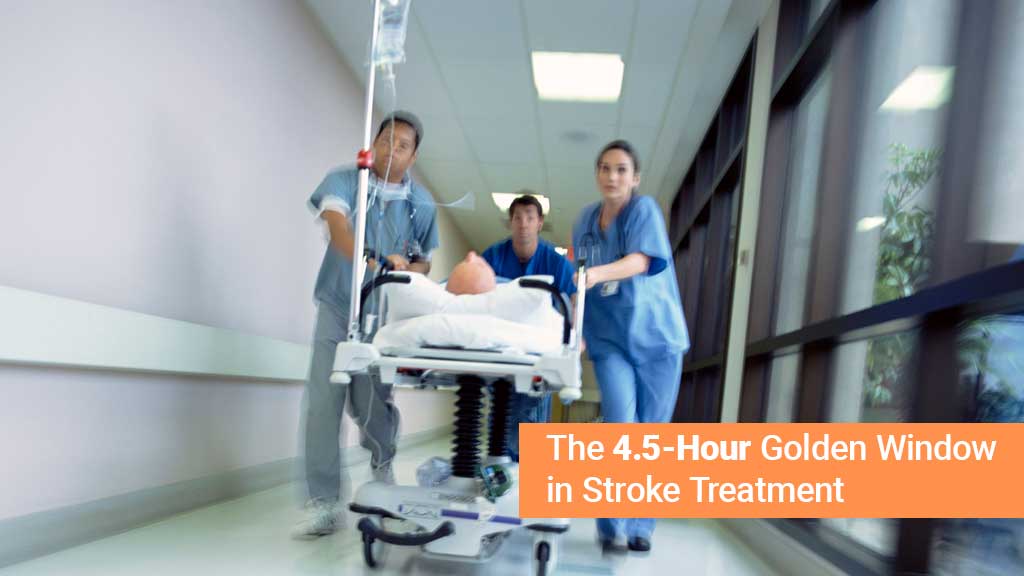
A stroke is a medical emergency that requires immediate attention. When blood flow to a part of the brain is interrupted, brain cells begin to die due to lack of oxygen. The extent of recovery after a stroke depends largely on how quickly medical treatment is started. In most cases, doctors refer to the first 4.5 hours after the onset of symptoms as the “Golden Window”—the crucial time frame during which treatment can make the maximum difference in saving brain function and reducing long-term disability.
UNDERSTANDING A STROKE
A stroke occurs when the supply of blood to the brain is either blocked or when a blood vessel ruptures. Without an adequate blood supply, brain tissue begins to deteriorate rapidly.
There are two main types of strokes:
- Ischemic Stroke: This is the most common type, accounting for around 85% of all strokes. It occurs when a blood clot blocks a blood vessel in the brain.
- Hemorrhagic Stroke: This happens when a weakened blood vessel bursts, causing bleeding in or around the brain.
Regardless of the type, immediate medical attention is vital to prevent permanent damage.
RECOGNISING THE EARLY SIGNS OF STROKE
Timely identification of stroke symptoms plays a major role in ensuring treatment within the Golden Window. An easy way to remember the key signs is the FAST method:
- F – Face: Sudden drooping or uneven smile on one side of the face.
- A – Arm: Inability to lift one arm or weakness in one side.
- S – Speech: Slurred or unclear speech, or difficulty in understanding others.
- T – Time: Immediate medical attention is needed – do not wait or self-diagnose.
Additional symptoms may include sudden loss of balance, severe headaches, blurred vision, or numbness. Even if symptoms last only a few minutes and disappear, medical evaluation is still necessary, as it may indicate a transient ischemic attack (TIA) or “mini-stroke.”
WHAT HAPPENS AT THE HOSPITAL
When a person with suspected stroke reaches the hospital, the emergency team performs a CT scan or MRI to identify whether it is an ischemic or hemorrhagic stroke.
- If it is an ischemic stroke, and the patient arrives within the 4.5-hour window, doctors may administer tPA intravenously to dissolve the clot.
- In certain cases, if a large clot is blocking a major artery, a mechanical thrombectomy – a minimally invasive procedure to remove the clot – may be performed. This can sometimes be effective even up to six hours after symptom onset, depending on the individual’s condition.
Prompt diagnosis and immediate treatment help preserve brain tissue and improve the chances of recovery.
THE IMPORTANCE OF PUBLIC AWARENESS
One of the biggest challenges in stroke management is delay in reaching the hospital. Many patients lose valuable time because early symptoms are ignored, or because they first visit local clinics that are not equipped for stroke care.
Increasing awareness about the 4.5-hour Golden Window is essential so that families and caregivers act quickly when symptoms appear. Recognising the signs and calling for emergency medical help immediately can save brain function and reduce the impact of stroke.
RECOVERY AND REHABILITATION
Treatment does not end once the immediate emergency is managed. Stroke rehabilitation is an essential part of recovery. Physiotherapy, speech therapy, occupational therapy, and counselling support help patients regain mobility, confidence, and independence. The sooner rehabilitation begins, the better the outcomes.
CONCLUSION
The 4.5-hour Golden Window represents the most critical period after a stroke during which medical intervention can significantly alter the course of recovery. Quick recognition of symptoms, immediate transportation to a stroke-ready hospital, and timely administration of appropriate treatment are key to improving survival and reducing disability.
Awareness of this window among the public, families, and caregivers is one of the most effective ways to prevent irreversible brain damage and to support better outcomes for stroke patients.