

Remia (35) was a topper in her batch from nursing school. The professors vouched for her. She was the most attentive and dedicated student they had had in years. It was no surprise that Remia was employed in one of the best hospitals in the city, and the doctors were very happy with her work. But within a year, Remia lost her job, and the reason stated by the hospital management was inefficiency and incompatibility at work.
What do you think happened here?
Remia was excellent in her clinical skills, which made her a favourite amongst professors and doctors, but when it came to dealing with people effectively, Remia fumbled.
Patients and their families complained that Remia never greeted them, was rude, and hardly took their feelings or difficulties into account. The other nurses complained that Remia never helped them out by filling in or standing up for them. Some of the hospital staff also reported instances when they were yelled at in public by Remia.
So while Remia had the best of clinical skills, she lacked in something that was a very integral part of her job- soft skills.
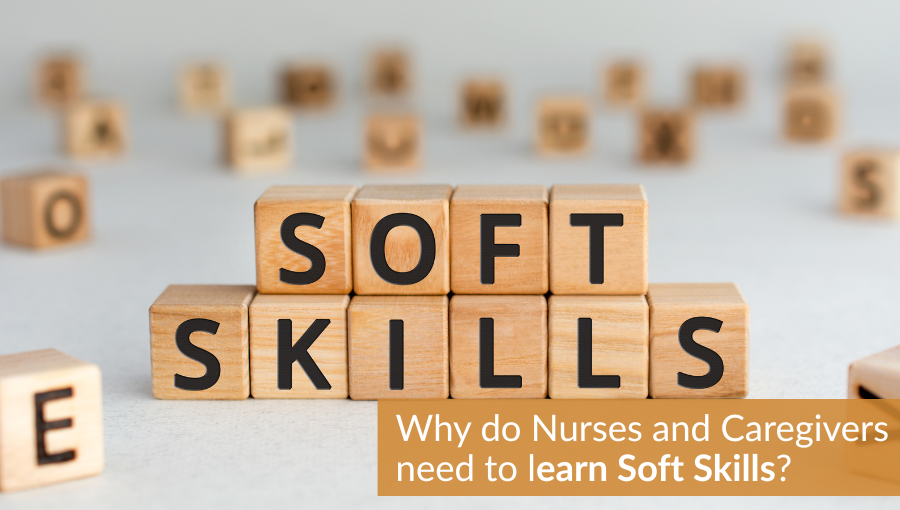
What are soft skills?
Shobha Sebastian, a soft skills trainer from Kochi, says that there is a lot of confusion when it comes to soft skills. Although the definition states that these skills are personal qualities that help people communicate and interact better with people around them, they go much beyond just communication and include a plethora of traits that enable a person to think better, behave better, perform better, and lead a happier and more inspiring life.
She states the following as examples of good soft skills
- Exhibiting effective and clear communication
- Showing empathy and compassion toward other people
- The ability to be flexible and adaptable according to different situations.
- Displaying emotional stability and maturity
- Being responsible and proactive
- Being honest and ethical
- Being a good team player
- Having proper time management
- Being patient
Soft Skills and the healthcare ecosystem
Experts say that soft skills proficiency goes hand in hand with the technical/clinical skills required by healthcare personnel. According to them, soft skills are highly preferred by employers and have a deep impact on the entire healthcare system. An analysis was conducted by Burning Glass, which is a software company that gives real-time data on the job market. The analysis found that amongst millions of jobs, more than a quarter of healthcare skills requirements are soft skills.
The primary reasons are:
1. Soft skills are crucial to patient safety.
This was corroborated by an editorial article published in the Journal of Patient Safety that revealed that most of the adversities in healthcare could be attributed to communication errors between staff, clinicians during treatment. Hospitals are not very pleasant places and can increase anxiety. Nurses and caregivers, along with doctors, are the faces of healthcare. The empathy exhibited by them by being thoughtful and receptive to the concerns goes a long way to calm people, contain their emotions, and make them feel comfortable and secure. Empathy also reduces the incidence of malpractices and adherence to treatment.
2. Inclusivity and diversity can be seen through soft skills.
It is beyond doubt that all healthcare practitioners, particularly nurses and caregivers dealing directly with patients, must be willing and able to work and treat people of all walks of life, irrespective of their race, culture, gender, and beliefs, with humanity being greater than everything.
3. Soft skills lead to patient satisfaction
Patients feel comfortable with the attitude of the healthcare personnel. When the latter are friendly and patient enough to provide positive treatment, they will be more eager to go through the treatment process, come for follow-up, and even be more cooperative. This will lead to the general satisfaction of the patients. In addition, each patient has their own needs. Nurses and caregivers go a long way to accommodate the patient to make him/her feel valued and well taken care of.
4. Soft skills foster teamwork
Delivering healthcare is an intricate balance of discussions, navigating high-pressure situations, and timely decision-making, without creating conflict. Good teamwork results in effective and seamless treatment procedures and outcomes, along with great patient comfort and safety. An efficient team also leads to a fair division of responsibilities, prevents burnout, and encourages a shared vision.
Developing soft skills is not a one-time learning process but an ongoing one where people need to keep learning and sharpening their skills throughout their profession and lives. We at Sukino ensure that all our nurses and caregivers, and other team members, are well-trained in balancing the technical and soft skills to perform efficiently and provide the best possible care to all our patients.