


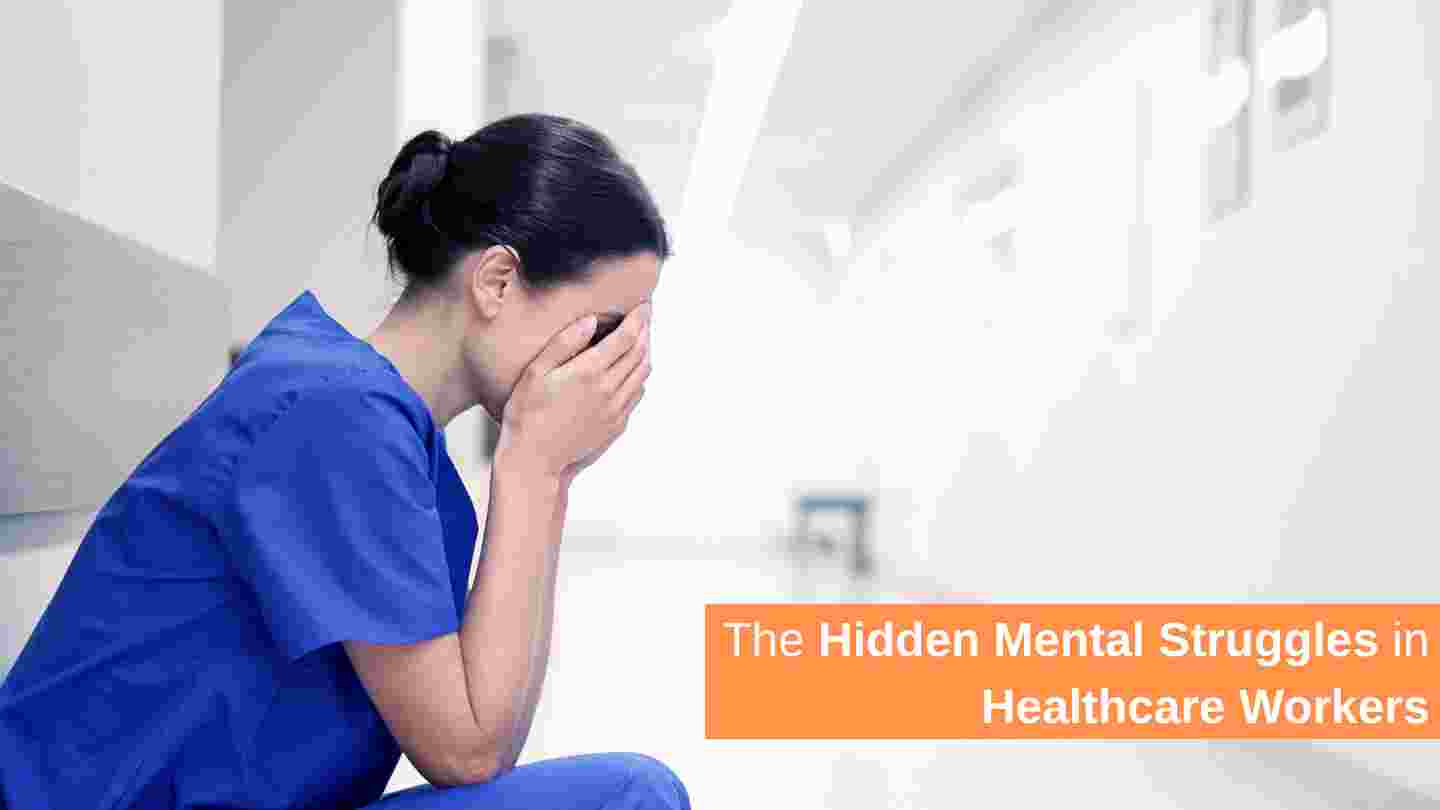
The healthcare workers put up a brave front every single time. Be it during endless hours of an emergency, the passing away of a patient, and feeling helpless when situations don’t go according to what they had hoped and worked for. Yet behind that seemingly unbreakable steel facade are just regular human beings who go through the same highs and lows and carry the same emotional baggage. The difference is that they are not allowed to show it or maybe even speak about it, and this emotional residue keeps accumulating in their hearts and bodies, emerging as silent depression and burnout.
The disturbing data
According to the National Library of Medicine (NIH), ‘there is now a wealth of evidence showing that work is a major determinant of physical and mental health. Recent studies have suggested increased rates of depression in healthcare workers (HCWs) in the context of the COVID-19 pandemic, with direct impact on care quality and productivity.’ This primarily happens because most of the healthcare workers don’t have the time to pause and care for themselves, and even if they develop signs of mental disturbances, they are usually reluctant to seek professional help. But what they fail to register is that these mental disorders, if not addressed, can significantly affect their well-being and pose a great risk to their professional practice. Research has further revealed that health professionals go through anxiety, insomnia, depression, and other symptoms that hint towards trauma. While most who go through difficult phases bounce back, however, when they are exposed to mental disorders, especially during epidemic outbreaks, their chances of recovery diminish. The World Health Organization has estimated a shortfall of 18 million health workers by 2030, mostly in low- and lower-middle-income countries.
What do experts say?
According to experts, the COVID-19 pandemic has exacerbated mental health issues amongst the overburdened healthcare task force. There are several reasons for the same. The heavy workload, prolonged shifts, a frenzied pace of work, absence of consistent self-care, moral dilemmas, job security, and at times, a lack of support. This has led to depression, burnout, anxiety, and sleep issues, and has had a significant impact on the productivity, efficiency, quality of care provided, and the overall health of workers. They call for a serious and dedicated effort to identify and mitigate the risk factors to safeguard the mental health and wellness of one of the most important task forces in society.
Dr Shefali Jha, a physician based out of Nashik, shares that, “Healthcare workers are trained to put the patients first. Hence, thinking about ourselves or our needs doesn’t figure much on our priority list.” The doctor goes on to add that healthcare workers have a certain public image of selflessness, and therefore, they fear judgment from others and experience guilt if they think of attending to their own needs. A better work-life balance and self-care care however, would enable all health workers to enjoy more satisfaction in their work and overall life.
Benefits of good mental wellness in healthcare professionals
- Better emotional and physical well-being.
- Ability to provide better care for patients with more compassion, sensitivity, effectiveness, and empathy.
- Helps create stability during difficult times to manage stress more efficiently.
- Emotional resilience facilitates better decision-making and problem-solving abilities and leads to enhanced optimism and personal efficiency.
Practices to improve mental wellness in health professionals
- Being aware- The first and maybe the hardest step toward ensuring better mental wellness is developing a sense of awareness of one’s emotional needs, stress levels, and being willing to take breaks when required.
- Lifestyle changes- Making a conscious effort to make certain healthier changes to the daily routine goes a long way. These are, taking a nature walk, meditating, being mindful while eating, establishing a consistent eating schedule, getting sufficient sleep, practicing some form of physical exercise, pursuing a hobby, meeting with family and friends often and finding a way to express and release emotions through either journaling or some creative work and talking to a friend or a therapist instead of repressing them.
- Thinking about strengths- Posing questions like how things could have been different or thinking negatively about oneself is very easy to engage, but healthcare professionals have to strive to think about their strengths and accomplishments to keep the desire and energy to continue.
- Decluttering and prioritizing- The most suitable thing to do to ensure that one does not get stressed is by prioritizing the work to be done and even doing one thing at a time. They should ease their work by outsourcing it, set healthy boundaries by learning how to say no, and use assertive communication.
- Reaching out for help- There is no cause for embarrassment in terms of seeking help whenever there is a need for it; whether a friend, colleague, or a professional counsellor to relieve the physical and emotional load and get back to work even stronger and more motivated.
The role of government and society in helping health workers be happier and healthier
For too long, the burden of being brave and performing ceaselessly has been on the healthcare workers. It’s time to pass the baton. Healthcare professionals maybe usually be referred to as heroes without a cape, but they are human beings at the end of the day. They are not invincible warriors, and they have their emotional and physical limitations. Gratitude, empathy, and respect from patients’ families go a long way in making them feel good and worthy of all the time and effort they have put in. On a higher level, the government can introduce a better reward and appraisal system and invest in better protective and preventive measures in the healthcare system to decrease the burden on healthcare professionals in the long term. It is also equally important to provide mental health support facilities to healthcare workers through mental health support programs and timely psychological interventions. A great example is the Self-Help Plus (SH+) program introduced by the World Health Organisation(WHO) that aims to address high levels of stress and mental trauma in workers through acceptance and commitment therapy. Using telemedicine platforms can not only offer timely and effective care to patients, but it can also decrease the workload on doctors and other healthcare professionals. The same platform can be used amongst the staff to discuss various medical interventions, and psychologists to offer aid to the workers when needed.
The narrative around mental health care for healthcare workers needs to change, and not be considered a luxury. The lifegivers can’t continue to keep pouring from an empty cup, and it’s time that an effective system is formulated that provides the caregivers the space and resources to heal themselves.