


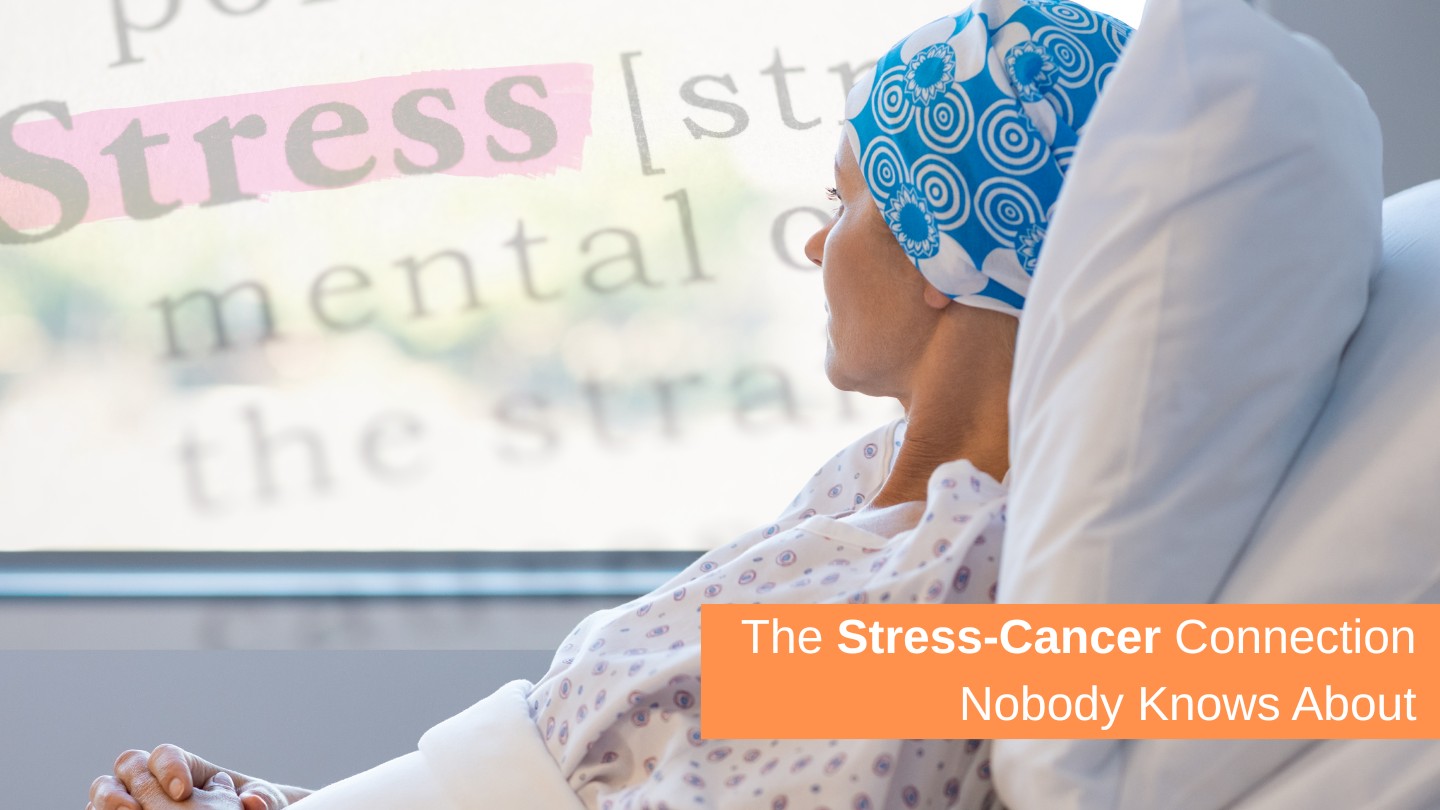
“Quick quiz: What causes cancer? Smoking, genes… but have you heard of stress-cancer?”
If not you answered the question partly only. You forgot the most important factor that probably causes you to smoke, sleep less, and eat unhealthy food. It is called stress.
And like it or not, stress has emerged as the major cause of cancer in people.
Surprised? Read on.
The mind-body connection
It is the link between the mental processes and the physical health of a person. To put it more simply, it is how a person’s thoughts, emotions, beliefs, and behaviour affect the body functions and vice versa. And this is not just pseudoscience. There has been sufficient research and various studies that prove how mental well-being plays an important role in the overall physical well-being of a person.
Recent studies reveal that chronic illnesses, hormonal imbalances, inflammation, nutritional deficiencies, and gut disorders are all the outcome of anxiety and depressive states of the mind, as they trigger biochemical responses in the body that have a direct influence on the immunity, heart health, digestion, and pain perception.
Susan McGarvie, Ph.D., makes some interesting observations about the body-mind connection on the ‘Positive Psychology’ website.
According to her, the mind-body connection that was well-understood by our ancestors has been neglected and even denied in the present times. Emotions such as grief, anxiety, etc, are embodied experiences that involve the nervous and endocrine systems. They affect the muscles’ tension and important body functions, though they may be primarily mental. When patients begin to understand this connection, it leads to better treatment outcomes, she says.
The cancer-stress loop
Experts claim that stress makes the body more hospitable to cancer!
The National Cancer Institute lists multiple studies that link stress to cancer.
One case-control study among Canadian men found an association between workplace stress and the risk of prostate cancer.
In a 2008 meta-analysis of 142 prospective studies among people in Asia, Australasia, Europe, and America, stress was associated with a higher incidence of lung cancer.
A 2019 meta-analysis of nine observational studies in Europe and North America also found an association between work stress and risk of lung, colorectal, and esophageal cancers.
Laboratory studies have found that norepinephrine, released as part of the body’s fight-or-flight response, stimulates angiogenesis and metastasis, a hormone that activates neutrophils, a type of immune cells that help tumors grow by shielding them from the body’s immune system; they may also “awaken” dormant cancer cells.
Chronic stress may also lead to the release of steroid hormones called glucocorticoids that stop tumor cell death and prevent the body’s immune system from recognizing and fighting cancer cells.
Researchers today consider inflammation a hallmark of cancer, with up to 20 percent of cancer-related deaths connected to it. And there is proof that stress triggers an inflammatory response in the brain and body.
Stanford Medicine has published an intriguing observation by Lawrence LeShan, an American psychologist who studied the lives of more than five hundred cancer patients and noticed an emotional life-history pattern in 76 percent of them. It was all about a childhood with difficult relationships, leading to an adulthood spent finding strength in relationships and pouring a lot of energy into them. The re-opening of childhood wounds and deep despair, and disappointment on the removal of those relationships, and finally bottling up of negative feelings like anger, disappointment, and hurt, and keeping up an opposite exterior.
People with cancer additionally have to deal with the stresses of their diagnosis, the challenges of treatment, and the fear of cancer recurrence, which affects their treatment outcome and worsens their condition.
However, there is an important thing to note here. The experts at MD Anderson- a cancer centre in Texas, USA, have some relieving news.
Anil K. Sood, M.D., professor of Gynecologic Oncology and Reproductive Medicine at MD Anderson, points out that there are two different types of stress, and only one of them may be bad for health. Short-term and long-term.
Lorenzo Cohen, Ph.D., professor of General Oncology and Behavioral Science, and director of the Integrative Medicine Program at MD Anderson, adds that short-term stress, like nervousness before an event, etc, subsides after the stressful situation. However, it’s the long-term or chronic stress that is the real culprit, as it lasts for weeks and months and causes undesirable changes in the body. It keeps the body in a high alert mode and leads to compromised immunity, increased inflammation, hormonal imbalances, poor sleep cycles, and sluggish cellular repair, which can trigger cancer.
Dealing effectively with stress
The Mayo Clinic offers simple yet effective tips to help you manage stress and keep ‘stress-cancer’ at bay.
• Exercise- As cliche as it may sound, physical exercise is known to be a great stress reliever as it releases endorphins and other natural chemicals in the body that enhance the sense of well-being and feeling good. A walk, swim even cleaning your house is enough if it keeps you active and takes your mind off the anxiety.
• Eat well- Include more fruits, veggies, and whole grains in your diet instead of processed foods and alcohol, etc, that give you temporary pleasure but deeply affect your health.
• Meditate- This can take your mind off the distressing thoughts and give you a sense of calm to improve your health.
• Meet more people and laugh more- Laughter can cure ailments by taking off the mental overload and bringing about positive changes in the body. Socializing, meeting people can reduce the irritability and stress that comes with isolation, while good friends who listen can make a huge difference in taking the grumpiness away. Visiting a place of worship or volunteering for social work are also great stress-busters.
• Learn to say no- Learn to say no when you cannot do something. Try delegating tasks, making a priority to-do list, and establishing healthy boundaries to increase your wellness journey.
• Sleep enough- Sleep on it wasn’t coined just for fun. During sleep, your brain and body recharge, and this affects your energy levels, focus, productivity, overall mood, and the functioning of your body.
• Be thankful- Despite the worst of times, there is always something to be grateful for. Maintain a gratitude journal and make a note of all the good things that happen throughout the day, however small they may be.
• Pursue a passion- It may be painting, singing, playing a musical instrument, cooking, or even travelling. These lessen the tension in the muscles and lower cortisol, which is a stress hormone.
• Get help- Talking to a professional helps you channelize your emotions and cope with stress very effectively.
Stress is inevitable. It comes as a package deal with life. But the crucial thing is to manage it well lest it give you a physical ailment like cancer that will jeopardize your life more and give you very little to smile about.