
How Simple Stretches Can Help You Fight Ailments
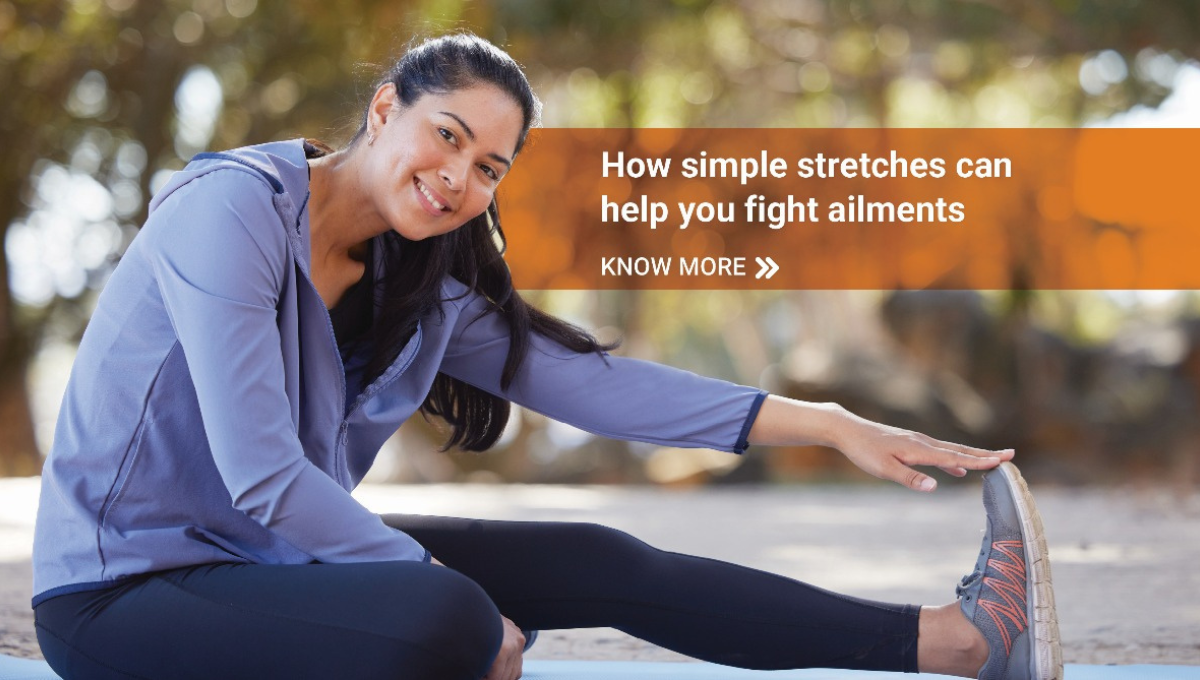
Stretches are simple exercises that most of us think are done after a gym workout or after spending a long time at the desk. We assume that such stretches make our muscles relax and give the body a break. However, do these stretches merely help when it comes to fitness, or is there more to these stretches than that?
This is what we found out.
What happens when a muscle is stretched?
When a muscle is stretched, there’s quite a lot going on beneath the surface — it’s not just pulling the muscle. Your body, nervous system, and even connective tissues all get involved in a coordinated response. Here’s what happens step-by-step:
- The muscle fibers lengthen
Muscles are made of tiny contractile units called sarcomeres.
When you stretch, these sarcomeres elongate, increasing the muscle’s length.
The connective tissue (fascia) surrounding the muscle also adapts by loosening slightly.
- The stretch reflex activates
Within your muscles, you have muscle spindles — sensors that can “feel” the length of your muscle.
When a muscle is lengthened, it’s these spindles that send a message to your spinal cord saying, “Yeah, we are being stretched.” With a stretch reflex, the body tightens the muscle so that it does not stretch too far.
- Golgi Tendon Organs Kick In
Located where muscle meets tendon, Golgi tendon organs detect tension, not length.
If the stretch is held for around 20–30 seconds, they send a signal to relax the muscle — this is called autogenic inhibition.
This relaxation allows the muscle to lengthen further without resistance.
How does stretching of muscles keep ailments away
When you stretch, muscles aren’t simply loosened, but a complex cascade of muscle fiber lengthening, nerve feedback, and blood flow increase takes place to help you increase flexibility, injury prevention, and relax the mind.
- •Lower back pain- cat-cow, seated forward bends, and a low spinal twist relieve the tight muscles.
- • Shoulder and neck pain-Side tilts on the neck and shoulder rolling will relax muscles and help develop a good posture as well.
- • Headaches & migraines- Stress at the back of the neck and upper back may lead to headaches and migraines, which can be eliminated by neck, jaw, and upper back stretches.
- • Stress and anxiety. Full-body stretching, especially with breathing deeply, stimulates your parasympathetic nervous system. This slows down the heart rate, reduces stress hormones like cortisol, and helps to unwind.
- • Arthritis and joint stiffness- Range-of-motion exercises can work on keeping the joints not too stiff, and they may facilitate everyday tasks.
- • Poor Circulation- If blood circulation is poor, stretches and ankle rotations will help improve blood flow and therefore counter the swelling and tiredness. Stretching increases the delivery of blood to the muscle and the tissues that are close to the muscle.
Oxygen and nutrients are brought to the area in greater numbers, and waste products such as lactic acid are washed out.
Stretching safely
Before the stretching exercise, warm up by engaging in light activities for 5 to 10 minutes. Post-exercise stretch is usually the best way to go. Stretches should be kept gentle and slow. Don’t bounce. Your stretches require breathing. When it hurts, you have stretched too far.
Extend yourself to the point of a little stretch. Afterward, stretch; maintain the pose to last approximately 30 seconds. Do the stretch two to four times on either side. Strive to stretch the big muscle groups in our body 2 to 3 times a week.
Discuss with your health care professional or physical therapist what stretches are appropriate given your health problems or injuries, and have him or her approve any exercises.
Some of the simple everyday stretches include:
• The cow-cat pose
• The floor hip flexor
• Floor hamstring with strap
• Full body stretch
• Double knee torso rotation
• Child’s pose
• Downward dog
• Standing calf
You don’t need a yoga mat or an hour-long session. Just 5 minutes twice a day would make a difference. Simply think that it is like brushing your teeth, an activity that you can engage in daily in order to make yourself healthy, confident, and use as a preventive medicine in the years to come.