


Knee replacement surgery is one of the most recommended surgeries for irreparable knee issues and problems. The reason is that it provides people with a second chance at pain-free mobility.
52-year-old Mumtaz Hakimji says after the surgery and some months of rest, she was finally able to climb stairs, visit the places she had longed for, and experience the freedom she had last done almost a decade ago.
However, Mumtaz says that surgery wasn’t enough for her to get back on her feet. The doctor instructed that she undergo ortho rehabilitation after the surgery. Although Mumtaz wasn’t very keen in the beginning for the rehabilitation program, she now vouches for it. According to her, recovery without ortho rehab would have been incomplete, and the strength in her knees would never have been restored fully.
How does ortho rehabilitation influence the recovery process?
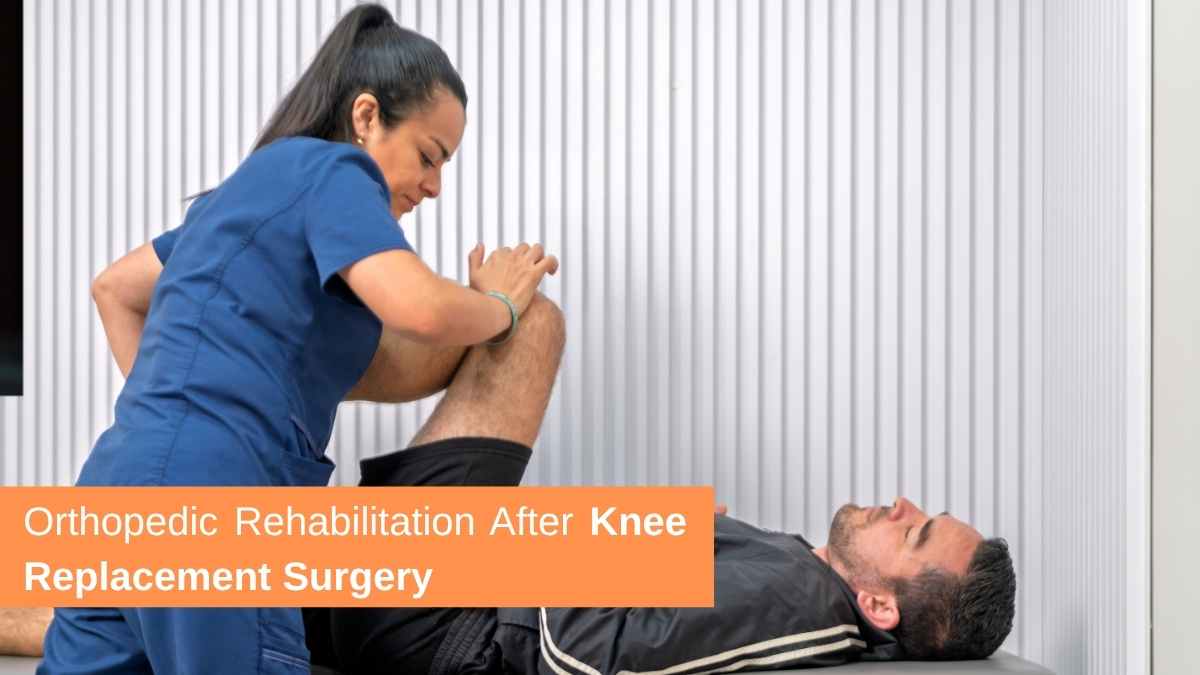
Basically, knee replacement surgery involves replacing parts of injured or worn-out knee joints. During the surgery, the surgeon replaces the damaged bone and cartilage with metal and plastic parts that perform the same function. This takes care of the damaged parts. But the muscles, tissues, and ligaments that are around the replaced parts need some time to get adjusted and create a certain amount of stiffness and weakness. This is where rehabilitation helps. The specialized program conducted by experienced therapists enables people who have undergone knee replacement surgery to regain their strength and balance.
The exercises also help reduce the pain and swelling and reinforce the confidence of bouncing back on their two feet in people, which is most valuable after the surgical procedure.
The Stages of Orthopedic Rehabilitation.
All recoveries are individual, and yet, a majority of the rehabilitation plans include an organized schedule that incorporates patience and progress together.
1-Recovery of Movement.
The process of rehab starts just a few hours after surgery. Professional advice is provided to avoid stiffness and increase blood flow with the help of gentle exercises, such as ankle pumps, leg lifts, and knee bends.
Goals:
Manage pain and swelling
Begin short-range-of-motion activities.
Start doing walks with assistance.
Even these little movements have a great impact in avoiding complications and training your body to heal quickly.
2-Strength-Building
With the alleviation of pain, the rehabilitation process is aimed at restoring muscle strength, particularly in the quadriceps and hamstring areas, to aid the new joint.
The therapists take patients through some specific exercises, balance, and gait correction. Hydrotherapy can also be implemented as joint-friendly exercise in hot water.
Goals:
Improve walking distance and endurance.
Improve flexibility
Make leg muscles stronger and enhance balance.
This phase would be the base of independence – walking with less support and confidence.
3-Recovery
The aim of this phase is to achieve full functional mobility, i.e., being able to climb up and down the stairs, sit and stand without any difficulties, and be able to perform daily activities without any difficulties.
Goals:
Improve control and coordination.
Go back to domestic and working life.
Progressively decrease support equipment.
Here, dramatic improvements are usually apparent to the patients; movements that they previously found impossible are now within reach.
The emotional aspect of rehabilitation
Orthopedic rehabilitation also helps on the emotional front. Most patients go through times of frustration or fear.
That is where the intervention of therapists is crucial. Motivation, sympathy, and supportive encouragement are used to break the mental barriers and restore confidence in patients.
“The original few weeks were hard, but each break and each step was a recovery of a part of myself I believed had been lost,” says Mumtaz.
The Multidisciplinary Care Team Role
Effective rehabilitation is teamwork. The team consists of:
- Physiotherapists – development of specific movement programs.
- Occupational therapists – assistance in the adaptation of daily activities safely.
- Caregivers and nurses – offering care and comfort via recovery.
- Doctors – keeping a check on recovery and leading the process.
This combination approach to care in continuum care centers, such as Sukino, achieves holistic recovery, a combination of physical, emotional, and lifestyle recovery.
Life Habits that help to sustain long-term recovery.
After becoming mobile again, it is a lifelong challenge to ensure the health of the joints.
- Keep moving: Low-impact exercise, such as walking or cycling, helps to keep the joints flexible.
- Watch your weight: Shedding weight is beneficial to the knee in terms of implant life.
- Eat smart: A balanced diet that is rich in calcium, protein, and vitamin D helps in repairing the bones.
- Pay attention to your body: Pain or swelling is an indication that you should rest or modify the intensity of your activity.
Surgery on the knee joints restores motion to the patient, but rehabilitation restores life. Consistency, guidance, and perseverance give patients a chance to leave the hospital bed and get back on the walking track with confidence. Any victory, however minor, is a step towards recovery and regaining freedom.