


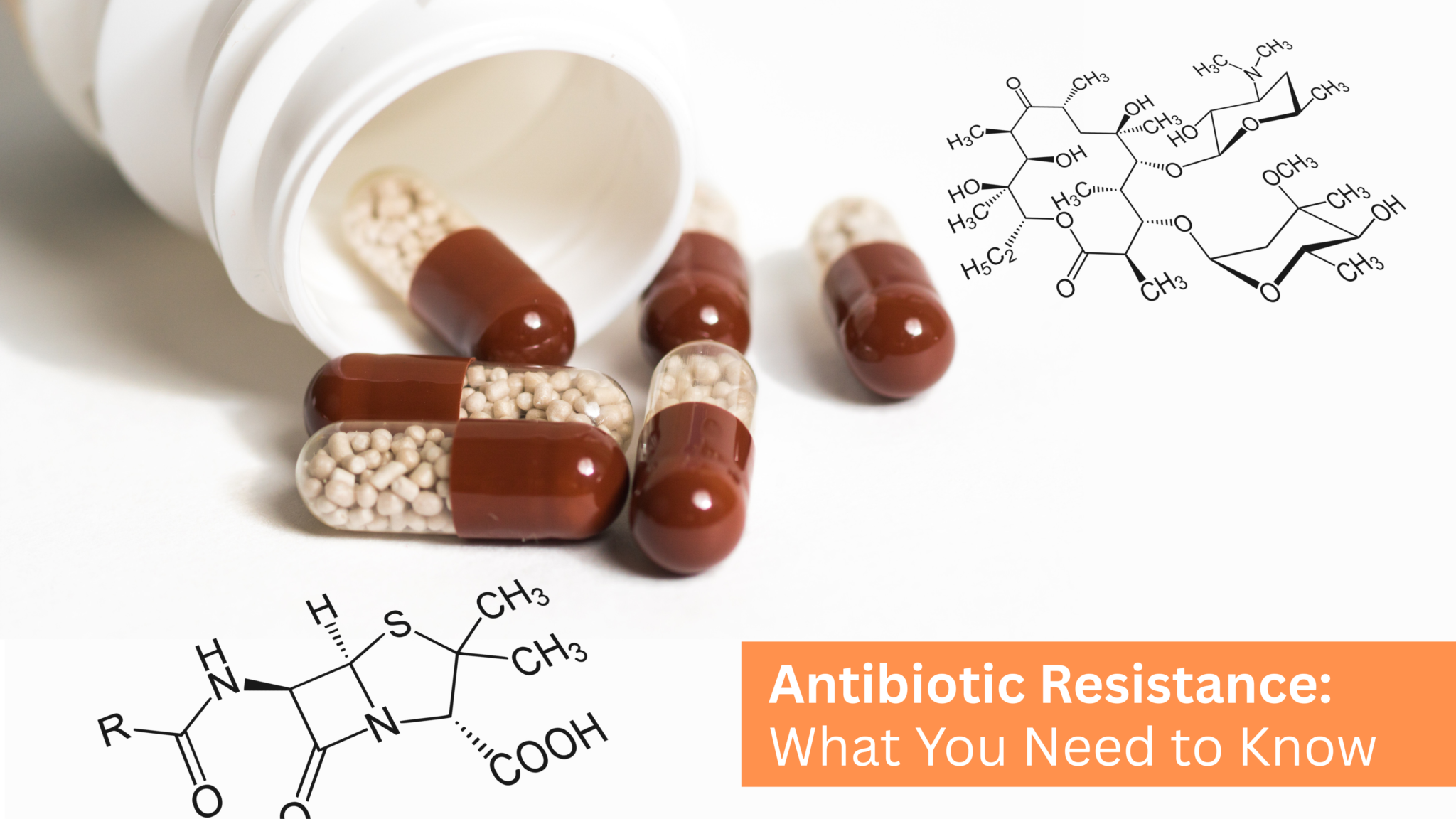
Since their discovery, antibiotics—once hailed as miracle drugs that could eliminate deadly infections—have saved millions of lives, but today they face a growing threat: Antibiotic Resistance, a silent and insidious health crisis with the potential to undo decades of medical progress.
You have probably heard the term somewhere before; however, what does it mean, and why does it matter to you? Let’s explore.
What Is Antibiotic Resistance?
The resistance between the antibiotics and the bacteria is a change that happens when the bacteria start to have the capability of defending against the effects of the antibiotics, which were initially effective in killing the bacteria. This implies that infections are more difficult to cure, take more time to treat, and are more likely to cause complications, hospitalization, and even death.
In simple English: The bacteria end up being more intelligent than the medication.
What Is The Reason Behind This?
The resistance does not occur instantly. It is cumulative, and in most cases, it is due to the way we employ (or rather over-employ) antibiotics.
The significant reasons are:
- • Antibiotics overuse (against viral diseases such as the common cold or the flu)
- • Partial use of antibiotics (quitting drugs when we notice that we are no longer ill)
- • Taking old antibiotics or self-medication
- • Doctor over-prescriptions are motivated by the demand of the patient
- • Excessive use in farming, where the antibiotics are used on livestock to stimulate growth
Whenever we use antibiotics irresponsibly, we provide bacteria with a chance to develop resistance and outwit the medication.
Why Not To Be Indifferent?
Antibiotic resistance is not some abstract, distant issue. It is already in process, it is touching adults and children, and it is all around the globe.
This is what it may mean:
- • Increased number of days in the hospital
- • More costly and poisonous therapies
- • Ordinary infections (such as UTIs or pneumonia) turning fatal
- • Higher risk when undergoing a surgery or procedure in which the danger of infection is high
- • The threat of antibiotic resistance by superbugs that cross the world
According to the WHO, antibiotic resistance belongs to the leading 10 threats to international public health.
What Are the Signs That Antibiotics Are Failing?
- • The absence of improvement in symptoms within 3-4 days
- • Symptoms worsening
- • Recurrence of symptoms following the discontinuation of antibiotics
The bottom line is that you should never touch your medication without consulting your doctor.
What You Can Do
Though scientists and policymakers are encouraging researchers to find new solutions, this is how the resistance wave can be contained.
- • Antibiotics should be taken with responsibility
- • Consume antibiotics that are prescribed by an accredited medical practitioner.
- • Do not hassle your doctor for giving antibiotics just because you have a viral infection.
- • Complete the whole course, although you feel better.
- • Do not self-medicate:
- • Never take any new medicine or use someone else’s prescription.
- • Do not purchase over-the-counter antibiotics without consulting healthcare practitioners.
- • Avoid infections by practicing personal hygiene, taking vaccinations, safe food handling, and maintaining social distancing, especially with people who are unwell.
- • Select beef, poultry, and meat poultry, which are free of regular antibiotics.
- • Buy the brands and support the policies that encourage the responsible use of antibiotics during farming.
Picture a world in which even a small wound is fatal. When an ordinary C-section or chemotherapy interventions turn risky due to the inability to battle any infections after such procedures. This has the potential to become a reality unless we take action now.
Antibiotics are a valuable, rare commodity. But if we keep abusing them, we will end up in a post-antibiotic world, where even the simplest bug will be fatal. Therefore, it is time to be careful before popping that pill. Let’s be better informed and more cautious, and safeguard our own health along with the health of society in general, and preserve these miracle drugs that can save our lives for generations to come.