

There comes a moment that a lot of families grapple with. The ICU phase is over. According to the hospital, the acute threat has been overcome, and the patient is medically steady. And yet they are not prepared to go home.
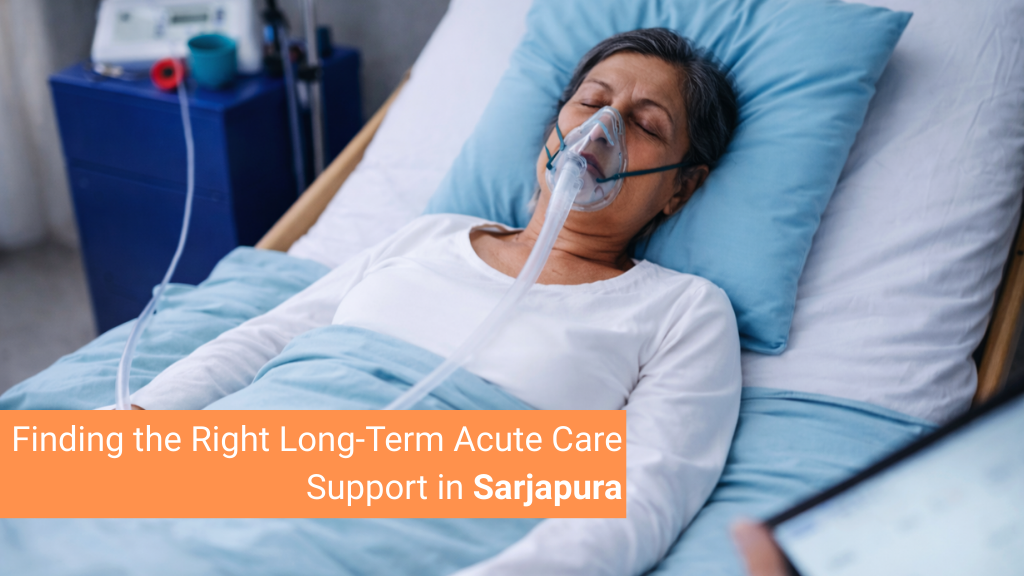
They might be required to be given oxygen support, feeding assistance, or help with mobility. They can be frail, disoriented, or fail to handle simple daily chores alone. It is here that a specialised L-TAC facility becomes a necessity.
What Is an L-TAC Facility?
L-TAC is an acronym that means Long-term Acute Care. The facility is established to help patients who are:
- Stable enough to get out of the ICU.
- Require close medical attention.
- Need proper rehabilitation.
Rather than sending patients home far too soon, an L-TAC centre offers the appropriate amount of medical care with specially-targeted recovery assistance.
Why is a facility like this required in Sarjapur?
The growth of Sarjapura has been significant in recent years. However, with the professional and cultural growth comes the healthcare needs of the expanding population. The congested suburbs need Long-Term Acute Care (LTAC) facilities to meet the health needs of the growing, aging population and to relieve the burden on traditional hospitals, which tend to be over-saturated. With the growth of suburbs, the number of patients who need specialized, long-term care due to complex, chronic, or post-surgery conditions is high.
The constant trips to the hospital throughout the city may be tedious, both emotionally and physically. Availability of a specialised L-TAC facility at Sarjapur means:
- Less travel stress.
- Easier family visits.
- Continuity of care.
- Quicker recovery.
The features to consider while choosing the best L-TAC facility in Sarjapur
All L-TAC facilities are not similar. This is what exceptional L-TAC care looks like:
1-Combined multidisciplinary care
The best facilities have:
- Critical care and rehabilitation physicians.
- Experienced nurses who have been trained in multi-layered wound treatment and management.
- Mobility and strength physiotherapist.
- Occupational therapists for independent functioning.
- Dysphagia and speech therapists.
- Respiratory therapists
2-24/7 Clinical monitoring and rapid response
Unexpected changes and emergencies may occur after critical illness, in particular with:
- Respiratory status.
- Fluctuation in blood pressure.
- Infection markers.
- Swallowing issues.
The 24-hour monitoring is a must-have for early intervention before any complications.
3-Targeted rehabilitation
Recovery is not just about keeping a patient alive but giving them their quality of life. Superior L-TAC environments incorporate the following rehabilitation as habits:
- Neuro rehab, behavioral, and functional movement.
- Ortho rehab in terms of strength, joint stability, and balance.
- Breathing endurance with pulmonary rehab.
- Heart recovery through cardiac rehabilitation.
This implies that every patient is treated according to his or her requirements, and not only by clinical maintenance.
4-Patient-centred, not procedure-centred care
The recovery process is not the same for all patients. A facility worth choosing:
- Builds personalised plans.
- Sets measurable goals.
- Makes adjustments depending on progress.
- Provides care that is not about the paperwork, but rather about the person.
5-Family Intervention and support
Critical illness affects the entire family. A strong L-TAC facility:
- Trains caregivers about the need to assist at home.
- Gives emotional support and counselling to the family members.
- Gives clear reports on the progress.
This lessens stress and allows families to emerge as self-assured partners in recovery.
Choosing the right L-TAC is important for proper professional care that improves and doesn’t deteriorate the health of the patient. This leads to planned progression from dependency to leading an independent life once again, making the recovery process stable and smooth. Reduces the risks of complications and hospital readmissions. In short saves the patient and their family valuable effort, time, and money and doesn’t break the confidence and morale of the patient. Additonally it provides the patient a home-like environment that is very conducive to happiness, comfort, and optimum recovery.
Sukino has launched a state-of-the-art L-TAC facility in Sarjapur. The aim is to provide uninterrupted, compassionate, and expert care with the right kind of coordination and consistency for effective results in the delicate stage between critical illness and full recovery.
For families in Sarjapura, this means access to a specialised L-TAC facility for recovery doesn’t feel rushed or feel uncertain, but supported all the way.