


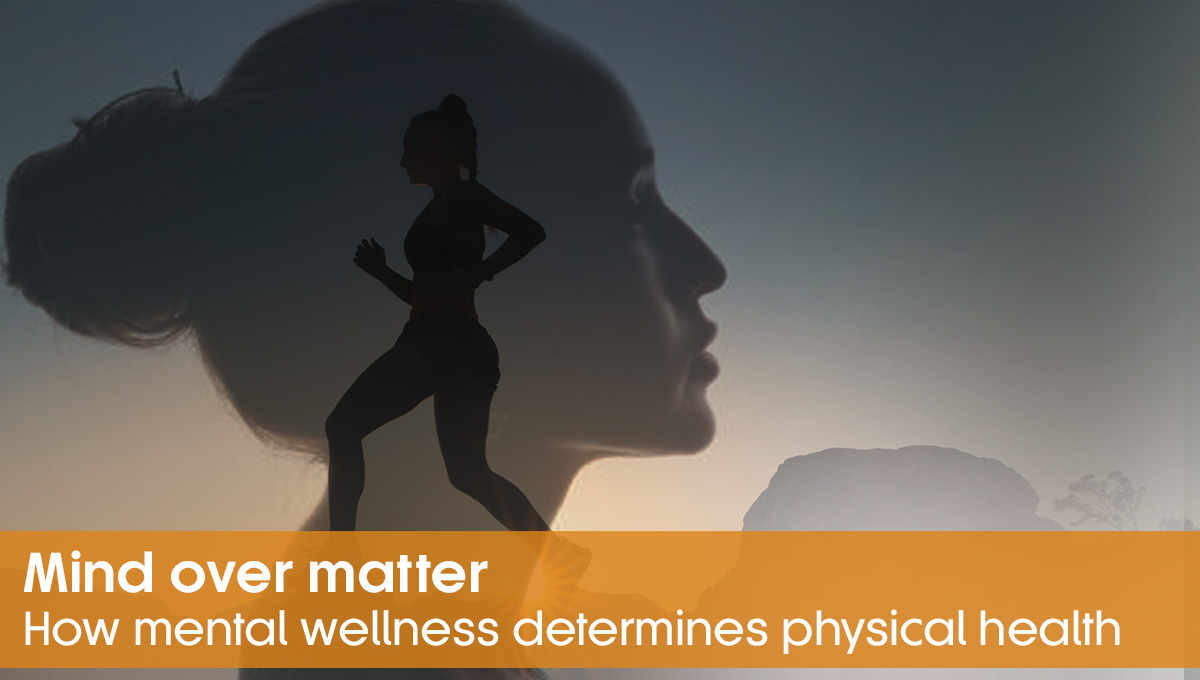
Have you ever wondered why your tummy starts acting up when you’re nervous? Mental wellness determines physical health, and if you’re contemplating that your mental state affects your physical state, you’re not alone.
Multiple celebrities like Demi Lovato, Dwayne Johnson, and Deepika Padukone have expressed how mental health challenges can impact the physical well-being of a person. And mind you, this isn’t some kind of pseudo-science as some people love to call it.
Studies have revealed the profound connection between mental wellness and physical health. They have uncovered multiple biological pathways linking organ health and brain health, suggesting that a prolonged disturbed mental state can lead to chronic illnesses.
In the realm of scientific inquiry, the prevailing belief for a long time was that our genes determine our overall health. But Dr. Bruce Lipton, a renowned cellular biologist, changed this notion entirely—ushering in the understanding of how the mind and mental wellness shape our genetic expression. He introduced a concept called “mind over genes” that states our thoughts, beliefs, and perceptions can profoundly impact our biological setup and, consequently, our physical health.
What happens to your body when your mind is disturbed
Many physiological changes take place inside your body when your mind is not at peace. These physiological changes disrupt many systems in your body.
Here is what happens-
1- When you are stressed, the brain activates the nervous system which releases hormones such as cortisol and adrenaline. The release of these hormones is perceived by the body as an emergency and sends the body into a flight or fight mode. When the body stays in this mode for prolonged periods it can be detrimental.
2- Being disturbed mentally increases your heart rate, your blood pressure causing heart ailments and an increased risk for stroke.
3- When your body is in panic mode, it needs more energy. Hence it diverts the energy it uses for other vital processes. Hence it slows down processes like digestion and causes acid reflux, constipation, diarrhea, and irritable bowel syndrome.
4- Your immune system weakens due to exhaustion because your body is constantly in fight mode. This makes you susceptible to colds and other infections and gives you auto-immune disorders.
5- Stress increases the tension in your muscles leading to muscle aches, stiffness, and pain. If the tension continues for a long time it can lead to chronic conditions like fibromyalgia.
6- High cortisol levels interfere with the production of melatonin, making it difficult for you to fall asleep.
7- If you keep your mind distressed for a long time, it can shrink the hippocampus (a part of your brain) which leads to difficulty in focusing on tasks, memory issues, and also decision-making processes. It can give you brain fog and neurodegenerative diseases such as Alzheimer’s.
8- Stress can interfere with the production of reproductive hormones which can cause irregularities in the menstrual cycle and give you fertility issues. It can further cause more complications in conditions such as Polycystic Ovary Syndrome (PCOS).
9- Whether you like it or not stress can make you crave fatty foods, and sugars and give you those extra kilos that you dread. The weight gain can further cause an imbalance in your metabolic cycle.
What can you do about it?
If we see you nodding sideways in slight exasperation, we urge you to read further. Because what we are about to suggest are not run-of-the-mill jaded techniques to reduce to stress that the internet is brimming with. We’ve tweaked them a bit to suit you in a better way so that you can easily include them in your daily routine.
- Next time you see your stress levels rising, be it at work, at home, or even amidst frustrating traffic try doing this. Consciously slow down your breathing and take deep breaths while you inhale and exhale. This will help you calm down almost immediately.
- Don’t have the time to hit the gym? Well, don’t starve your body of some physical activity. How about parking your car a little bit further and walking a little more to your destination? Or taking the stairs up to the canteen to eat your favorite snack.
- Next time you reach out for your phone at bedtime we suggest keeping a book handy. Make the switch and read instead. You will sleep faster and more peacefully.
- Try eating home-cooked food for at least 3-4 days a week and reduce the number of coffee breaks. Try drinking water instead.
- This one you’ll love. Learn to procrastinate and say no to additional work during your day. It can be carried forward the next day or even delegated to someone else if you cannot manage.
- This one is easy and helps. Keep post-it notes by your bed along with a cup or a jar. Write down all the good things that happened to you throughout the day however small they may be and start filling your cup/ jar with those notes.
- Last but not least, ask for help. Consulting a psychologist or a counselor is as simple as seeing a doctor when you have a fever or any other issues. They will help you clear your mind and navigate through the rough patch more effectively.
Napoleon Hill so very correctly said, “You either control your mind or it controls you”. Learn to nip stress in the bud with small steps and simple techniques before you move on to bigger and more effective ones and save yourself with a smile on your face.