

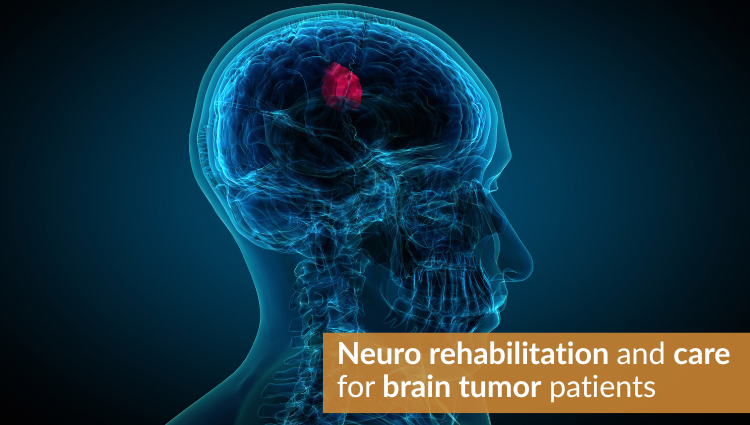
A brain tumor is never a simple diagnosis. To both the patients and families, it is the start of a very difficult and lengthy process- a process that does not culminate with surgery or radiation. The next thing that follows is also crucial: the recovery, the restoration of the lost functions, and the reconstruction of life. It is here that the concept of neurorehabilitation brings a ray of hope.
The Post-Treatment Underlying Struggle
After the resection or treatment of a brain tumor, the brain needs time and assisted guidance to heal. Depending on the location, size, and nature of the tumor, patients might have many physical, cognitive, and emotional challenges.
These include:
Partial inability or inability to use one side of the body
Problem with speaking or comprehending language.
Problem seeing or hearing
Problems with memory and concentration
Depression of emotional instability
Challenges in balance and coordination
Every patient’s recovery process varies. This is why neurorehabilitation is never a generic practice but rather a custom-made approach to assisting patients regain their independence and quality of life.
Neurorehabilitation is the recovery that is defined as a multidisciplinary process, aimed at assisting the brain in rewiring itself after it has been damaged, and it is capable of doing so, due to a phenomenon called neuroplasticity. The program deals with a multidisciplinary team composed of neurologists, physiotherapists, occupational therapists, speech-language pathologists, psychologists, and nurses operating jointly to achieve the following:
- Restore motor functions and mobility
- Re-establish speech and communication
- Enhance mental powers
- Promote emotional and mental well-being
- Embark on life skills training daily
The primary aim of neurorehabilitation is not only about recovery, but also about reintegration, getting patients back to their homes, places of work, and communities with as much independence as is safe and possible.
What does the care program include?
- Assessment
Individual patients go through a detailed evaluation to get to know their health status, medical issues, and goals for the treatment. A personalized rehabilitation program is subsequently developed by the care team.
- Physical Therapy
Physiotherapists help to regain strength, coordination, and balance – usually with the help of facilities including gait trainers, resistance bands, and neurostimulation machines.
- Occupational Therapy
Simple tasks like dressing, cooking, or bathing might become difficult for the patients. In order to regain their independence, occupational therapists teach the patients the adaptive measures to perform daily functions in addition to training them on the use of assistive devices in case they need them.
- Cognitive and Speech Therapy
Brain tumor patients experience speech impairment. Speech and cognitive therapy aims at enhancing communication and memory abilities with the help of systematic exercises and interactive methods.
- Psychological and Emotional Support
Brain tumor survivors experience depression, anxiety, and PTSD. Psychologists offer counseling services, mindfulness, and coping techniques to get through these emotional obstacles.
- Education of Family and Caregiver
The family members form an inseparable component of the recovery process. Educating them on care methods, safety measures, and emotional support is relevant to the recovery process.
It has been seen that early treatment gives much better results. The aptitude of the brain to regenerate itself is greatest immediately after a medical procedure or operation. Neurorehabilitation initiation within this crucial period may boost functional recovery and lead to the inhibition of secondary complications such as muscle atrophy or depression.
Contemporary neurorehabilitation is no longer confined to beds and walkers. It includes:
- Cognitive therapy based on virtual reality
- Brain-computer interfaces
- Speech and memory training interactive applications
In Sukino Healthcare, we use these technologies together with a human touch, as we know that healing is not entirely about machines, but about understanding, support, and faith.
Consider the case of Mrs. Anita, a 48-year-old schoolteacher who had a benign brain tumor removed. She developed slurred speech and weakness on the left side post-surgery. Yet after three months of our comprehensive neurorehabilitation program, which included speech therapy, physiotherapy, and counseling, she was back to teaching and even started her favorite dance classes.
Her story is not the only one that we have to reminds us of this: a brain tumor is not the end of life. It can be the start of a new one with proper care.
Neurorehabilitation provides brain tumor patients with an opportunity not only to survive but to live well. It ensures that patients regain their positions in their families, places of work, and in society. Above all, it is about dignity, independence, and the chance of happiness, despite what happened to them.
Whether you or a loved one is in the process of recovering from a brain tumor, you are not alone. There is always a way ahead with competent treatment, a caring staff, and rehabilitation proven over the years.