


We have all had moments in our life — including episodes that may trigger self-harm behaviour — which our minds tend to delineate into happy or sad, good or bad, favourable or unfavourable.
While there is no growth without these experiences, the emotions they stir up can often feel overwhelming in the moment. From seemingly minor stressors like being stuck in traffic and getting late for work, to more painful events like the end of a relationship, losing a job, being reprimanded by a loved one — or in more distressing cases, experiencing emotional pain so intense that it may manifest as self-harm behaviour — each of these moments can feel deeply consuming.
These experiences often create in us, feelings of disappointment, sadness, guilt, regret or anger. We all pick our poison when it comes to these situations, and we all cope in different ways. Such is the human condition that no two people respond to the same problem in the same way. Some of us may retreat inside ourselves and not feel like interacting with the outside world, while others may feel extreme anger and lash out at others .The remedies employed by our minds to deal with negative emotions can be diverse. It may seem paradoxical, but in some of us these emotions can be so uncomfortable that the only way to cope is by causing another type of hurt to ourselves. Let us use an example to understand further. Think about the most anger-provoking situation in your life, where someone treated you unfairly. It can be you being blamed for something you never did, or someone else being rude or unjust with you. It can even be something as benign as you being cut off in traffic. Now how many of us in this situation, would have hit the steering wheel in utter frustration. One might guess many! Of course, this is a completely normal and acceptable response as long as it did not physically damage us, others or hopefully the steering wheel. In some individual’s however , emotions are dealt with in more severe ways of harming the self, and in those cases, we call it as “self-harm behaviour”(SHB). Alternate terms for such behaviours are “deliberate-self harm”(DSH) or “non-suicidal self-injurious behaviour” (NSSI).
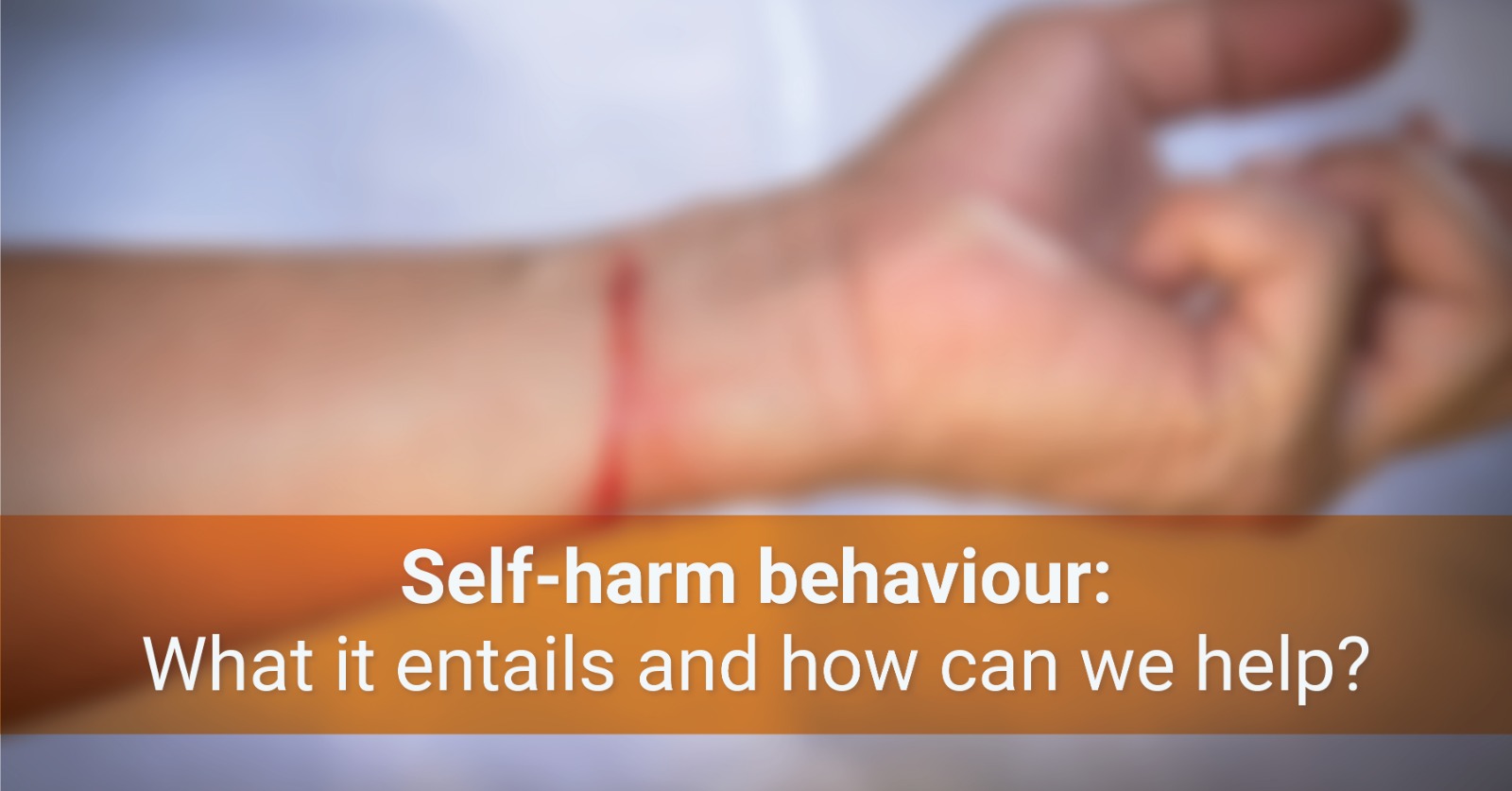
SHB is defined as an ‘ intentional self-inflicted destruction of bodily tissue without suicidal intention, and for purposes not socially sanctioned.’ It is a growing clinical and public health problem, that needs our attention. Common ways that individuals do this can include cutting, burning, scratching, or self-hitting. SHBs become significant when they occur repeatedly, and are used as a way to cope with negative emotions. It is important here to note that self-harm is different from suicide, and often has a complex relationship with it. Although suicide attempts are aimed at causing one’s own death, self-harm is not aimed at ending one’s life but rather, it is a coping mechanism that brings about relief. This statement may confuse you and may make you wonder how this works? To understand this, we must dispel some myths about self-harm. First, many people hold the belief that these are acts which are carried out to grab attention. This however, is a very small facet of the entire entity that we term as self-harm, and in many cases, it is not true. Second of all, that repetitive self-harm in any case requires the aid of a mental health professional and while a momentary coping mechanism, it is an unhealthy one that needs treatment. What purpose does it serve? Well, when the experiences of individuals who have engaged in self-harm were studied, one of the most common responses received was that it helped individuals to cope with the intensity of emotional pain by and large. It serves as a relieving mechanism when some individuals are affected by negative experiences, be it rejection, disappointment or loss. Due to such an intense experience, the pain is perceived as intolerable, and by inflicting physical pain on oneself, individuals who self-harm distract one sort of pain with another, that is physical and tangible. Thus, it serves as an emotional regulator, particularly in the context of negative emotions. Indeed, research has shown that the act of self-harm is preceded by negative emotions, and followed by an increase in positive emotions. This is one mechanism by which self-harm may help affected individuals deal with their thoughts and feelings. Another mechanism by which it helps, is in the context of human relationships. It can serve to mediate or avoid the demands of a relationship should one feel unable to cope with its complexities. Lastly, it may also serve to generate attention in moments where the affected person feels isolated, misunderstood, or neglected in a relationship. When we mean ‘relationship,’ it is not a mere referral to romantic relationships, but even in platonic, parental or any relationship of value. Thus, broadly speaking SHB serves as a regulatory mechanism to cope with isolation. But we know well and above that not all individuals engage in SHBs. Studies have shown that SHBs are associated with a number of mental health conditions, such as depression, personality disorders, Post-traumatic stress disorder (PTSD), substance abuse along with other anxiety and mood disorders. Not to mention, although explicit definitions exclude suicide as a motive, there is an elevated risk of suicide if SHBs are repeatedly engaged in. There is no single cause for why some individuals engage in this behaviour, but a number of individual and environmental factors have been shown to play a role. The former includes factors that we discussed previously such as difficulty in regulating emotions, and mental health conditions. The latter include adverse childhood experiences, and the ways in which we form and respond to relationships. (Attachment patterns)
Now that we are equipped to understand what SHB includes, it is imperative that we understand one important thing. It is our duty to support individuals with SHB to seek help. This is because our experiences as human beings serve to bring us together, and the situations that cause affected people to harm themselves, are not different from the fundamental human experience of pain and suffering. We must embrace the bad to grow, and the way to do so is through social support, lending an ear, and encouraging the act of seeking help. You are not alone. The first step has been made when help is sought. This can sometimes involve emergency care, in cases where the attempt was severe, or if it is associated with depression. Emergency management involves intensive mental health treatment, sometimes entailing in-patient admission, medication and the extensive use of therapeutic practices to help individuals from repeating the behaviour. This is done through a number of different modalities, such as crisis intervention, which serves to administer and teach the patient a number of practical skills and solutions to cope with the crisis that may have triggered the event. Cognitive behavioural therapy (CBT), another type of therapy can help patients understand how thoughts, emotions and behaviours are linked, and often times we can have mal-adaptive ways of thinking about things that happen to us, which can be addressed and changed in therapy. Dialectical behaviour therapy (DBT) utilises a multi-disciplinary team helping individuals to tolerate and cope with intense emotions, distress, to be more mindful in the various situations of life, and to be effective in communicating in our relationships. In conclusion, there are a vast plethora of resources to help treat, seek support for, and to understand this common, yet troublesome behaviour. Help is just around the corner.
Summary : Self-harm behaviour (SHB) is defined as the ‘intentional self-inflicted destruction of bodily tissue without suicidal intention, and for purposes not socially sanctioned.’ Alternate terms include Deliberate self-harm (DSH) or Non-suicidal self-injurious behaviour(NSSI). The common age group at which it is seen is adolescence and young adulthood. Although SHBs do not entail an attempt to end one’s life, they are typically associated with an elevated risk of a suicide attempts in the future. SHBs have a multifactorial aetiology, and typically serve a purpose in the interpersonal or intrapersonal context of an individual, the former including coping with relationship demands, rejection and the latter include emotional regulation. SHBs are associated with various mental health conditions, such as depression, personality disorders, Post-traumatic stress disorder, and other mood as well as anxiety disorders. However, they can also occur as isolated phenomena. SHBs require public awareness and understanding, and are prone to be misunderstood. Any individual engaging in SHBs should be encouraged to seek support and help from a mental health professional. Initial management can include in-patient admission if the person is at a high risk of repeating, for diagnostic clarification and initiation of treatment. Treatments include medication initiation if required, with further management provided through several different options of psychotherapy, principle ones including Crisis Intervention, Cognitive behavioural therapy (CB)T and Dialectical behaviour therapy( DBT). It is important to prioritise the individual’s choice in treatment, and empathy goes a long way in helping them feel understood. After all, negative experiences and the emotions they generate are a fundamental human experience. We have much more in common with affected persons than we know.