

Many people associate healthcare with doctors, medicines, and hospitals. In every healing process, the strength and persistent help of the nurse makes all the difference. Nowadays, nurses are asked to do many more duties than just providing support at the bedside as the focus on continuous care grows. They now play a vital role by linking every area of healthcare, starting at prevention and ending with recovery and connecting the home and hospital.
What is meant by the Continuum of Care?
The approach is designed to provide healthcare, starting with prevention, finding out if a disease is there, treating it, giving rehabilitation, and ending by offering palliative care. This system allows some patients to get professional care at hospitals, rehabilitation places, clinics, or even from the comfort of their own homes.
The importance of nurses in continuum care
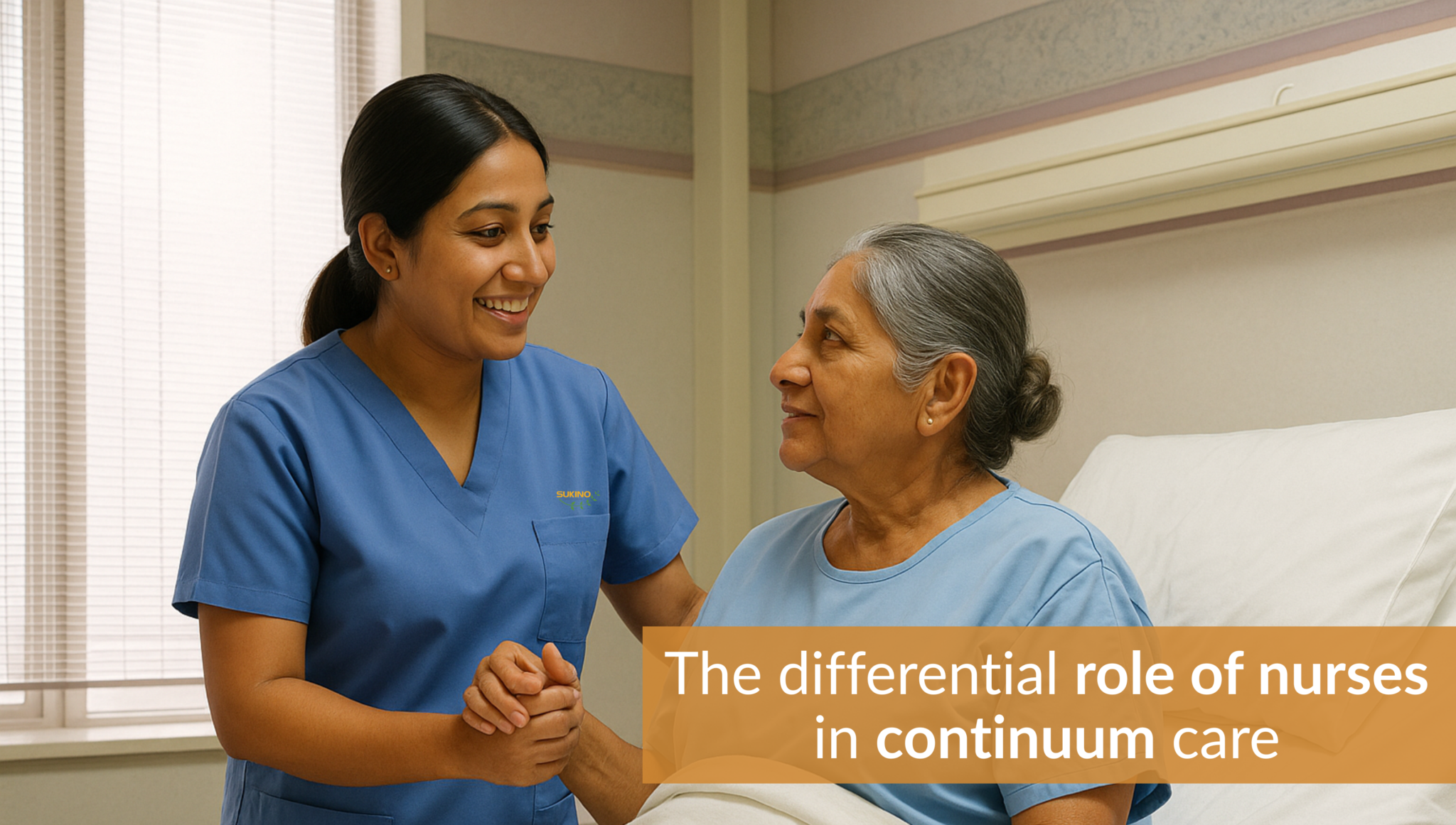
In this dynamic framework, nurses do not play a single role — they wear many hats. Their adaptability, empathy, clinical skills, and communication prowess make them central figures at every touchpoint.
Acute Care
When a crisis occurs, nurses are commonly the first individuals to respond and think clearly.
- They do regular monitoring of vital signs and give proper medicine.
- Look after the patient.
- Liaise with doctors so they can assist appropriately.
- Support families facing stress by listening and being there for them.
- In uncertain emergencies, critical care nurses are known for being precise, quick, and calm. They help people medically and ensure prompt intervention whenever a quick response is needed.
Recovery
During rehab, regardless of the condition, nurses guide and facilitate the recovery process.
- They work closely with doctors and therapists to formulate care plans and execute them.
- Monitor the progress and provide quick intervention if there are any side effects or complications.
- Support patients in recovering their independence through motivation.
- Manage medication.
- Quality of life is greatly improved for the elderly and patients with complex illnesses, thanks to the contribution of rehabilitation nurses.
Homecare and Transitional Care
The process of recovery continues even after discharge from the hospital. Homecare and transitional care nurses contribute in the following way.
- Help both patients and caregivers understand medication, treatment, and functionality.
- Keep an eye on chronic conditions to reduce the risk of hospital readmissions.
- Bridge the gap between care at the hospital and care at home.
- Support patients to approach their last days with dignity.
- They make sure there is no loss of patients during the transition from the hospital to home.
Mental Health and Holistic Well-being
Now, mental health is seen as a vital aspect of one’s overall health and happiness. Psychiatric and mental health nurses are professionals who specialize in mental health.
- They determine the psychological and emotional conditions of the patient.
- Offer counseling if required.
- Keep track of medications and note any changes in behavior.
- Support families who are dealing with mental health problems.
- They bring empathy, patience, and deep listening to the realm of continuum healthcare.
Preventive Care
Apart from treating diseases, nurses also focus on disease prevention.
- They organize screenings and offer health lessons to the community.
- Encourage people to be vaccinated and instruct how to manage any chronic diseases.
- Explore the factors in society that impact health such as poverty, poor nutrition, or loneliness.
- Partner with residents and officials from the government for better healthcare practices.
- They stay active in communities, offering help to prevent people from being hospitalized by increasing awareness, providing access to services, and intervening early.
Chronic Care Management
If a person has a long-term disease like diabetes, heart failure, or Parkinson’s, nurses are their main source of help and support.
- They pay close attention to symptoms.
- Modify the care plans.
- Provide information on diet habits and use of medication
- Increase patients’ ability to cope with challenges and handle their health problems.
- Build lasting relationships with patients based on trust.
Education
Nurses have vital tasks behind the scenes.
- They teach new staff and caregivers
- Create strategies for preventing infections
- Promote what is right for patients and the standards of proper care
- Be a part of policies and programs aimed at improving the quality of healthcare.
Why is their role differential
The way they function is unlike the role of any healthcare provider. Nurses adapt based on any situation and it makes them stand apart.
- In the ICU they are responsible for making important decisions that can save lives.
- At home, they are a great support system.
- At rehab centers, they encourage patients and keep records of their progress.
- In the field of public health, they serve as teachers and advocates.
- At any place of employment, they serve as a reliable bond keeping the healthcare system together.
Saluting the hardworking and unsung heroes
This International Nurses Day we salute our nurses who not only care for our patients but bring people together, collaborate, and help make a difference. We remember their outstanding care, strong leadership, and caring attitude that has helped provide comprehensive healthcare with a humane touch.
Sukino’s nursing services at home have been consistently excelling in delivering top-notch care, all conveniently provided at our care centers and in the comfort of the patient’s home. We offer a diverse range of nursing care tailored to the individual’s needs, spanning from non-medical care to specialized medical treatments.