


There is an interesting study published by PubMed Central that challenges the traditional method of treating a stroke patient. It poses a pertinent question of whether we were approaching stroke treatment incompletely.
It says,’ Traditional approaches to stroke rehabilitation have predominantly centered on facilitating functional recovery through compensatory strategies to alleviate the consequences of impairments rather than addressing their underlying causes. However, a growing realization within the scientific and medical communities has underscored the extraordinary transformative potential embedded within neuroplasticity. This recognition has prompted a paradigm shift in stroke rehabilitation, emphasizing the harnessing of neuroplasticity to facilitate functional recovery and promote substantial and enduring improvements in long-term outcomes for stroke survivors.’
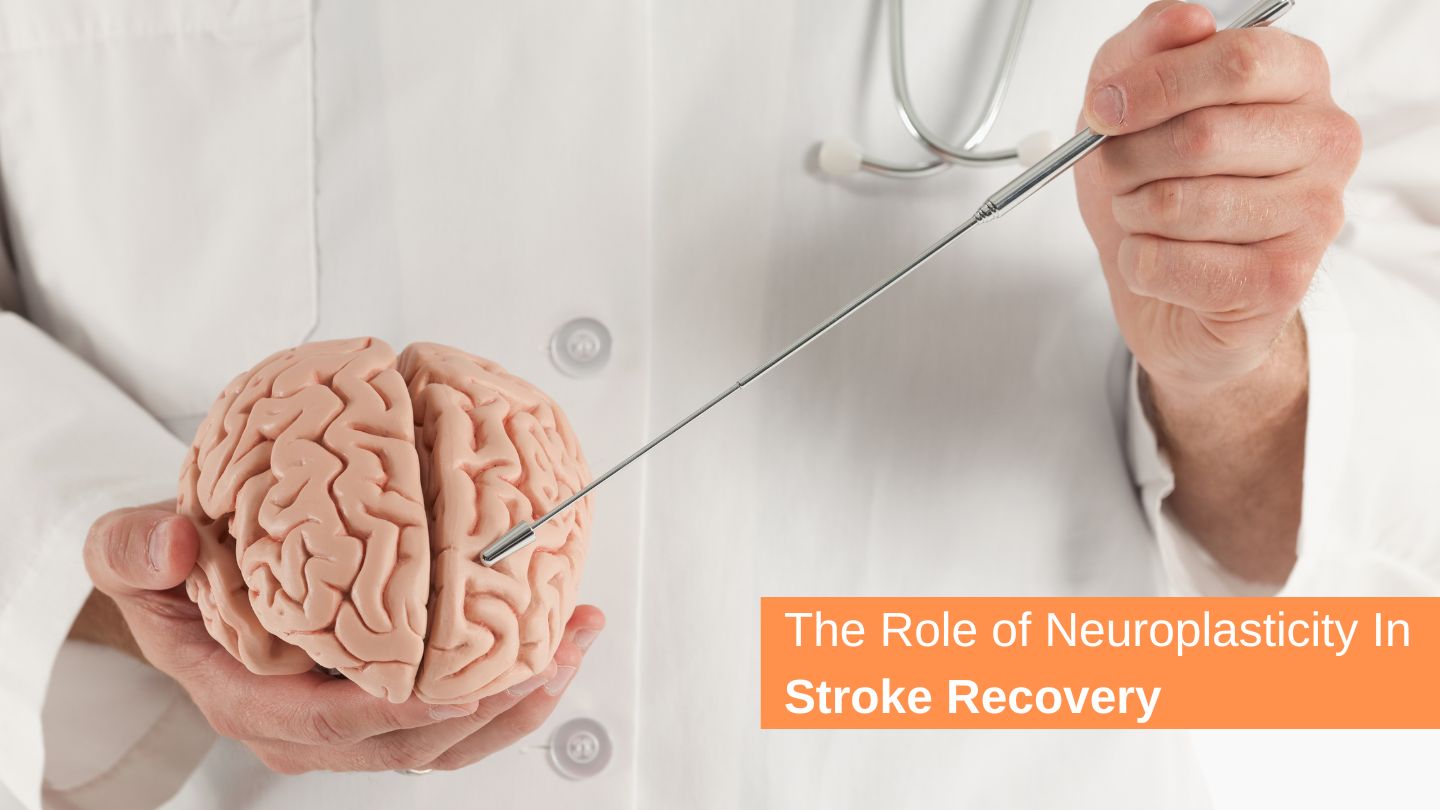
According to PubMed Central, ‘Neuroplasticity encompasses the brain’s remarkable capacity to reorganize its structure and function in response to diverse internal and external stimuli. This complex phenomenon involves a complex interplay of cellular, molecular, and synaptic changes that enable the brain to adapt, learn, and repair itself in the face of neurological damage caused by stroke.’
If we have your attention, we would like to tell you more about neuroplasticity and how it plays a differential role in post-stroke treatment for optimum recovery.
What neuroplasticity means
Neuro refers to the neurons, which are the nerve cells in the brain and the nervous system. Plasticity refers to the brain’s ability to change.
Hence, in simpler words, Neuroplasticity is the brain’s ability to reorganize or make new neural connections( connections between two neurons) internally if there is a new experience, knowledge, or a query. It reveals a valuable piece of information that the brain’s internal structure is flexible and can be changed or adjusted. For your knowledge, the connection between two neurons happens through an electrical impulse and is called a synapse.
Experts say that neuroplasticity is of two types
1-Functional plasticity – This is the brain’s capacity to shift certain functions from a damaged area to another undamaged part of the brain.
2-Structural plasticity- This is the brain’s ability to actually modify its physical structure due to learning.
Ways to improve neuroplasticity for quicker stroke recovery
1-Hand and arm activities- Individuals with limited hand and arm mobility can significantly utilize hand and arm exercises that include finger tapping, wrist curls, reaching, and grasping large and small and textured objects. This promotes motor coordination and power. The other method is Constraint-Induced Movement Therapy (CIMT), where the unaffected hand is restricted in use and the affected hand is used by putting it into action. This causes the brain to reinstate weak neural connections.
2- Leg exercises and walking- Movement is key for neuroplasticity. Hence, exercises such as marching while being seated in one place, toe tapping, heel/ calf raises, sit-to-stand exercises, and weight shifting from one side to another, along with walking, are very beneficial.
3-Cognitive and speech training- To enhance speech and thinking abilities after stroke, cognitive exercises like word association games, various tongue and lip exercises, reading aloud, and playing memory improvement and problem-solving games can make a significant difference.
- Mirror therapy- This is a unique therapy where a mirror is used to create an illusion of movement in the affected limb. This rewires the movement pathways and helps restore the functioning of the affected limb.
- Music therapy- Music activates certain areas in the brain and aids recovery. Exercises such as drumming, tapping of fingers or hands, singing, and listening to songs help in recovery in a fun way.
6- Repeating tasks- Repeating tasks like brushing of teeth with the affected hand, using the hand to cook, performing daily activities like combing, etc, can encourage neuroplasticity.
7- Imagination-Thinking and imagining can activate the brain tremendously, according to research. Closing eyes and imagining the movement of the affected parts and carrying out specific tasks with them reinforces the motor pathways in the brain, facilitating physical movement faster.
8- Functional Electrical Stimulation (FES)- This therapy involves using electrical pulses to enhance the movement of muscles.
Tips to keep in mind for the best results
- Neuroplasticity is most effective if these principles are followed:
- Keep learning something new. Variety is key.
- Practice the new skill and focus on one specific skill.
- Be consistent and dedicated.
- Take immediate action.
- Positivity makes the treatment and progress achievable.